
Logo Making Fuzebox

What Makes a Logo Memorable?

Logo Making Fuzebox

What Makes a Logo Memorable?

"A logo isn't just decoration. It's the first word your brand speaks — often before you get a chance to say anything at all."
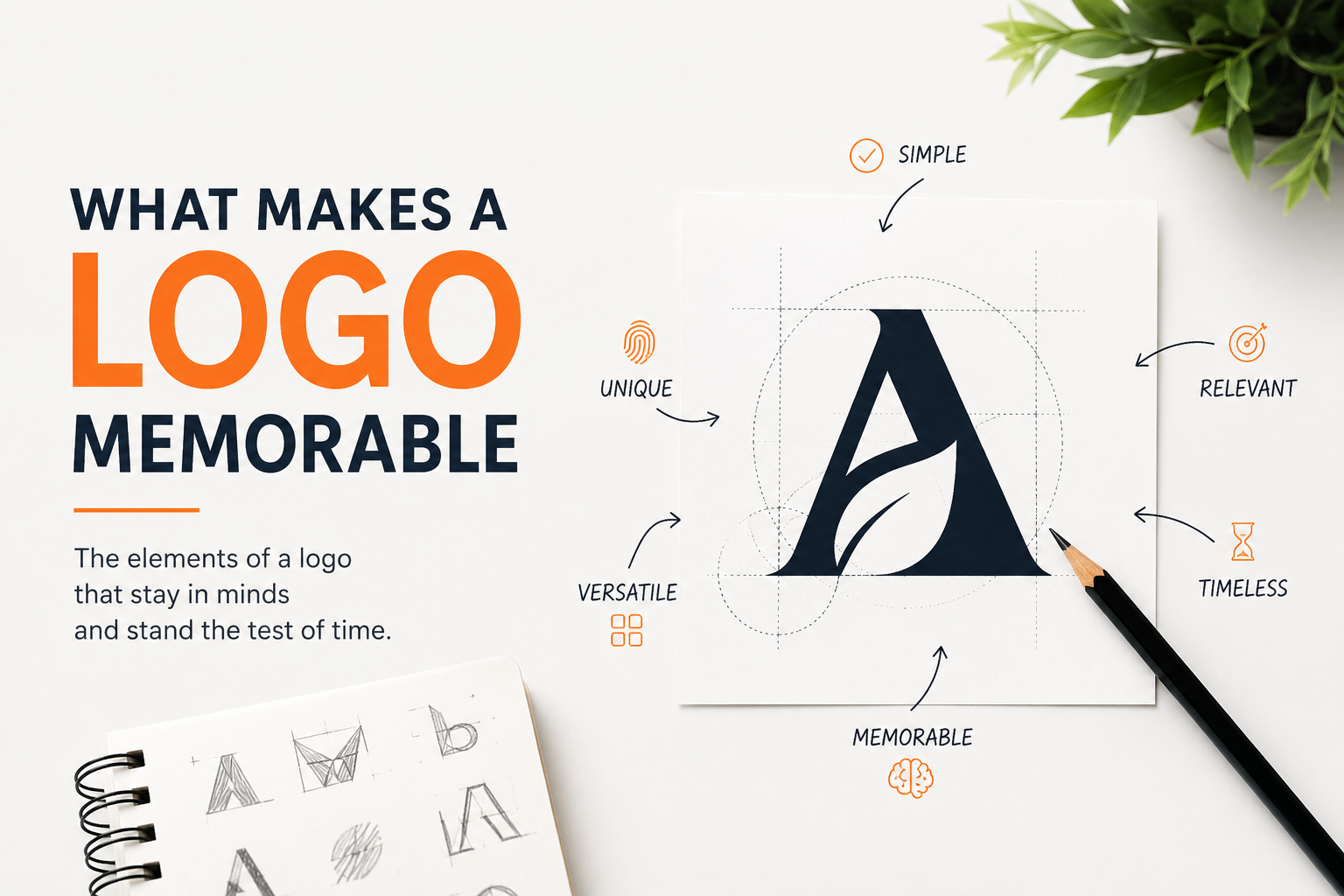
Think about the logos burned into your memory. The golden arches. The swoosh. The bitten apple. None of them describe what the company does — yet you know exactly who they are. That's not luck. That's design working at its highest level. At Fuzebox Media, we work with businesses every day who want a logo that "looks nice." We gently push back. A logo shouldn't just look nice — it should be unmistakable. Here's what separates logos people remember from logos people scroll past.

RECOGNITION SPEED
400ms
How fast the brain identifies a familiar logo — faster than reading a word
BRAND COLOR RECALL
80%
Increase in brand recognition when consistent color is used across touchpoints
01Simplicity — the hardest thing to achieve
The most iconic logos are often the simplest. Simplicity makes a logo faster to recognize, easier to reproduce, and more versatile. If you can’t sketch it from memory after seeing it once, it’s probably too complex. Every element should earn its place. Think of Nike’s swoosh — a single curve drawn in seconds, worth billions in brand equity.
02 Distinctiveness — owning visual territory
A memorable logo looks like nothing else in its space. That means resisting trends and committing to a visual idea that’s genuinely yours. FedEx looks nothing like UPS. Apple looks nothing like Microsoft. Distinctiveness is what stops a thumb from scrolling — and what makes people say “I’ve seen that before.”
03 Relevancewithout being literal
A great logo feels right for its brand without spelling it out. Amazon’s logo doesn’t show a warehouse — it shows a smile and an arrow from A to Z, communicating customer happiness and breadth of range in one elegant swoop. A law firm doesn’t need scales. A tech company doesn’t need a circuit board. Evoke the feeling, not the function.
04 Versatility — alive in every context
Your logo will live on a website, a business card, a 10-foot sign, and a phone screen the size of a postage stamp. A strong logo works in one color, in black and white, at tiny sizes and massive ones. McDonald’s golden arches work on a motorway billboard or a takeaway bag. If your logo breaks in any context, the design isn’t finished yet.
05 Storytelling — the hidden layer
The best logos reward a second look. FedEx hides an arrow in the negative space between the E and x. The WWF panda is built from minimal shapes yet unmistakably alive. The Tour de France logo conceals a cyclist in the letter R. These details create a sense of discovery that deepens connection — people remember what made them feel clever.
06 Consistency — repetition builds memory
Even a mediocre logo becomes familiar if used consistently over time. And a brilliant logo can be eroded if it’s constantly tweaked, stretched, or dropped on clashing backgrounds. Coca-Cola has used roughly the same script since 1887. Brand equity is built through repetition. Protect your logo like the asset it is.

The best logos don’t just identify a brand — they become symbols that carry meaning people project onto them. That’s not design. That’s culture.

Some of the world’s most recognized logos break conventional “rules” — but succeed because they execute their core idea with total conviction. Here’s what we can learn from them.

Nike Logo

Nike Logo

A single swoosh designed in 1971 for $35. Now priceless. Simplicity
Coca Cola Logo

CocaCola

Spencerian script since 1887. Unchanged for 130+ years. Consistency

amazon logo

Amazon

Amazon A smile from A to Z — happiness and breadth in one mark. Storytelling
google logo

Google

Primary colors in unexpected sequence — playful, human, warm. Distinctiveness
Starbucks

A siren that became so iconic the wordmark was dropped entirely. Versatility

Slack

11 colors, 4 shapes — a hashtag that means collaboration. Relevance


We don’t start with software. We start with questions. Who are you trying to attract? What do you want people to feel when they encounter your brand? What makes you genuinely different from every competitor in your space?

The answers to those questions — not the latest trends — drive every decision in your logo. From the weight of the letterforms to the exact hex value of your brand color, everything should trace back to strategy. A logo is often the smallest asset a business owns and the most powerful. Getting it right is worth the investment.